
Best Things to Do in Cuenca Ecuador (Travel Guide)
Visitors looking for things to do in Cuenca Ecuador will find a city rich in colonial architecture, museums, markets, and scenic river walks. Many of the most popular attractions are located in the historic center where travelers often choose to stay in boutique guest houses like Casa Tierra Cuenca. Use the guide and the map below to help you plan your days.
- Explore the Historic Center
- Walk Along the Tomebamba River
- Visit the Flower Market
- San Sebastián Square
- Pumapungo Museum
- Other Museums
- Panama Hat Museum
- Mirador de Turi
- El Cajas National Park
1. Explore the Historic Center of Cuenca
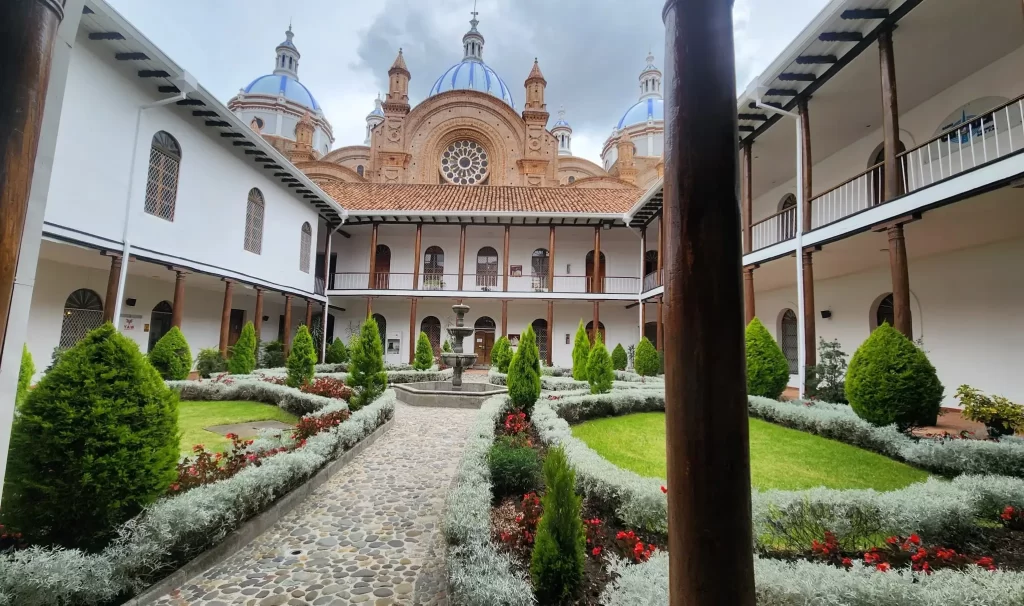
The historic center of Cuenca is a traveler’s dream. Parque Calderón and the New Cathedral (Catedral de la Inmaculada Concepción) are the heart of the experience. The park features lush gardens, iconic araucaria pines, and a 1931 monument, surrounded by major landmarks like the New Cathedral (blue domes) and the Old Cathedral. Directly across from the park, and next to the new Cathedral is the former San Luis Seminary. The seminary has become one of the most important heritage sites in the city of Cuenca, a place that has been restored and made available for public visits, hosting various businesses and social events. The inside of the seminary courtyard was opened to the public in 2017 after a long restoration process. It is a lovely space with several restaurants to enjoy a meal. There are several ferias held in the courtyard throughout the year. The historic center extends several blocks, with stunning architecture, museums, suprise courtyards and rooftop cafes, making it a vibrant cultural and social center.
2. Walk Along the Tomebamba River
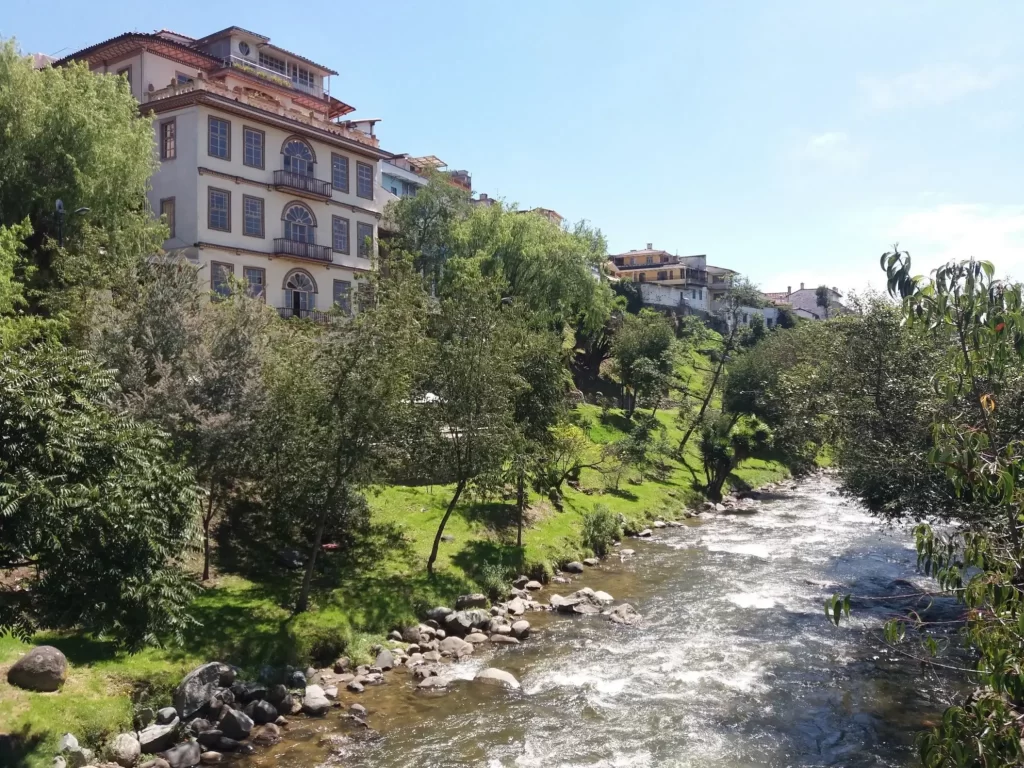
The Tomebamba River can be found three blocks south of the Historic Center. It is lined with eucalyptus willow, Capulin and avocado trees. Ornamental plants like magnolias and bugambillas are also plentiful. There are landscaped walking paths (Orillas del Tomebamba) that run through the heart of Cuenca, separating the historic center from the modern southern districts. These paved, tree-shaded, and flower-lined trails offer a peaceful, flat walking experience, popular with joggers, families, and those seeking nature within the city.
3. Visit the Flower Market (Plaza de las Flores)
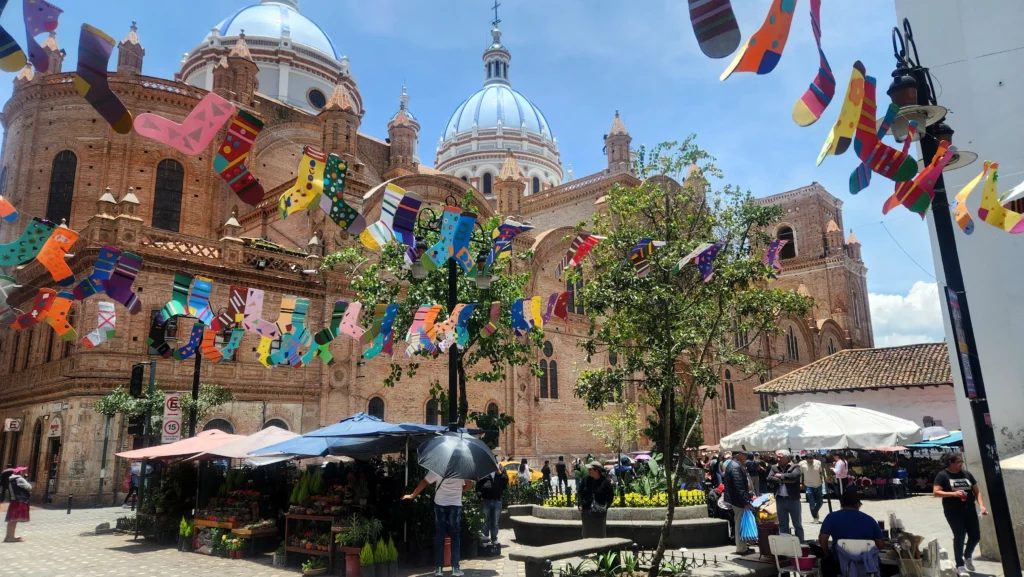
A visit to Cuenca’s famous Flower Market—known locally as Plaza de las Flores—is one of the simplest and most memorable ways to experience the charm of this historic Andean city. Located beside the blue domes of the New Cathedral of Cuenca, the market overflows each morning with vivid roses, lilies, orchids, and many other blooms grown in Ecuador’s highlands.
Vendors arrange colorful bouquets along the small plaza, and the scent of fresh flowers fills the air as locals and visitors stop to admire the displays. Bouquets are surprisingly affordable, making it easy to take home a beautiful reminder of your visit.
For travelers exploring the historic center, the Flower Market offers a glimpse into everyday life in Cuenca—a place where beauty, tradition, and community are part of the city’s daily rhythm. ?
4. San Sebastián Square
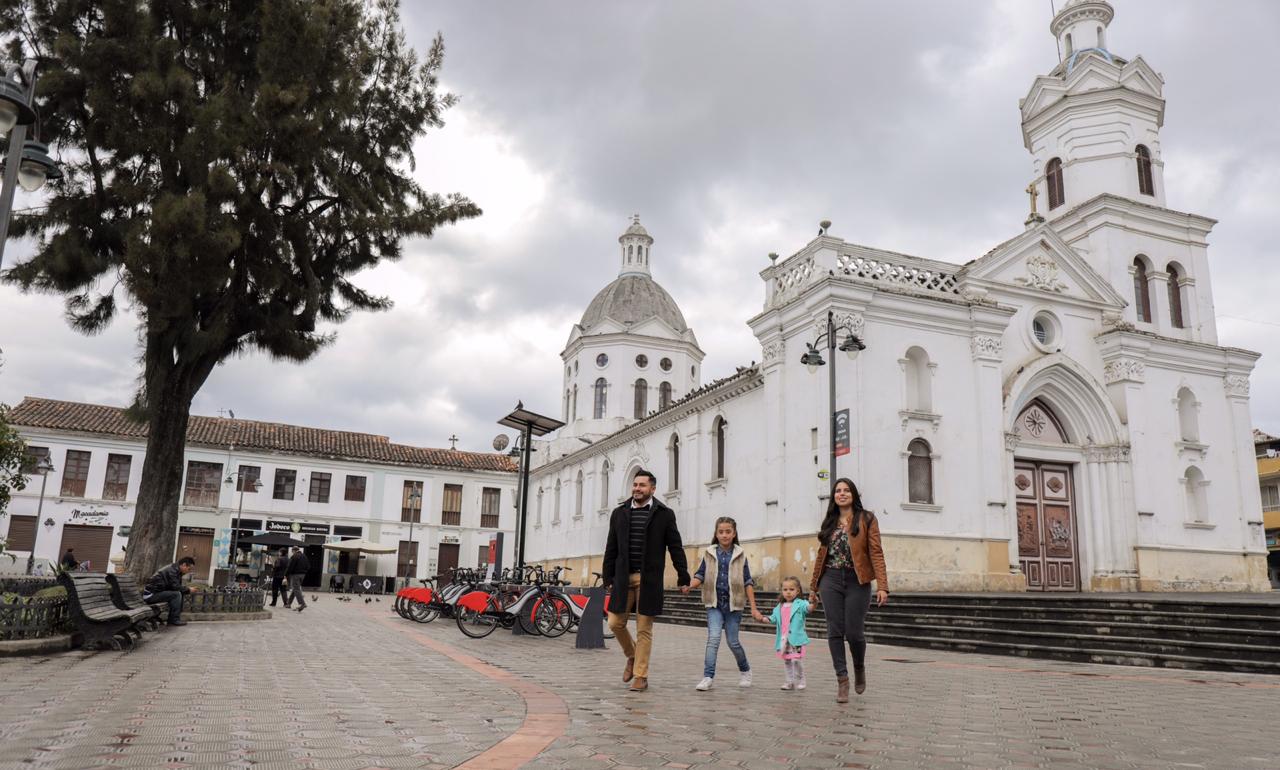
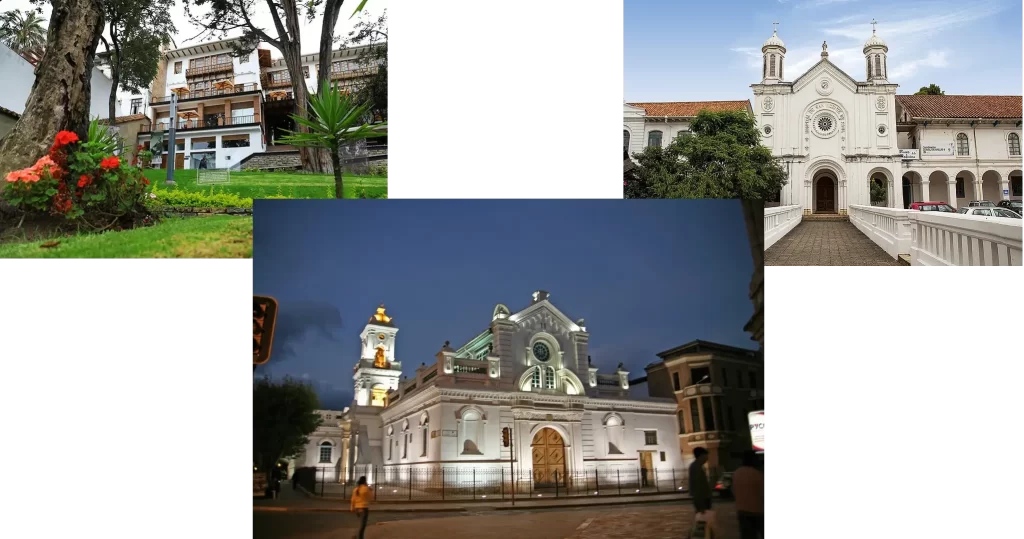
A short walk west of the historic center brings visitors to San Sebastián Square, one of Cuenca’s most charming and relaxed plazas. The square is anchored by the whitewashed Church of San Sebastián and surrounded by colorful colonial buildings, small cafés, and local galleries. This area has become known as Cuenca’s informal arts district, home to cultural centers and creative spaces such as the nearby Museum of Modern Art Cuenca. The plaza’s open space, historic architecture, and laid-back atmosphere make it a pleasant place to sit with a coffee, explore nearby art exhibits, or enjoy one of the quieter corners of the historic city.
5. Pumapungo Museum and Archaeological Park
One of the most important cultural sites in Cuenca is the Pumapungo Museum and Archaeological Park. Located just east of the historic center near the Tomebamba River, this large complex combines a modern museum with extensive outdoor archaeological ruins. Inside the museum, visitors can explore exhibits that trace thousands of years of Andean history, including artifacts from pre-Inca cultures, the Inca empire, and Ecuador’s colonial period. Outside, walking paths lead through the preserved ruins of the ancient Inca city of Tomebamba, terraced agricultural gardens, and a small wildlife area featuring native animals such as llamas and birds. With sweeping views of the river and the historic center, Pumapungo offers one of the most fascinating and scenic places to explore Cuenca’s deep cultural heritage.

6. Other Museums in Cuenca Ecuador
Cuenca’s historic center is one of the best places in Ecuador to explore museums on foot. Within about ½ mile of Parque Calderón there are roughly a dozen museums, making it easy to spend a day wandering from one cultural landmark to another. Visitors can step inside the beautifully preserved Old Cathedral of Cuenca, which now serves as a museum displaying centuries-old religious art and artifacts from the colonial era. Other fascinating stops include the Museo de Historia de la Medicina Guillermo Aguilar Maldonado and the elegant Museo Municipal Remigio Crespo Toral, known not only for its collections of art and historical artifacts but also for its pleasant café downstairs—an ideal place to relax after exploring. With so many museums concentrated in the walkable historic district of Cuenca, visitors and future residents alike can easily immerse themselves in the city’s culture, history, and artistic traditions.
7. Panama Hat Museum / Homero Ortega
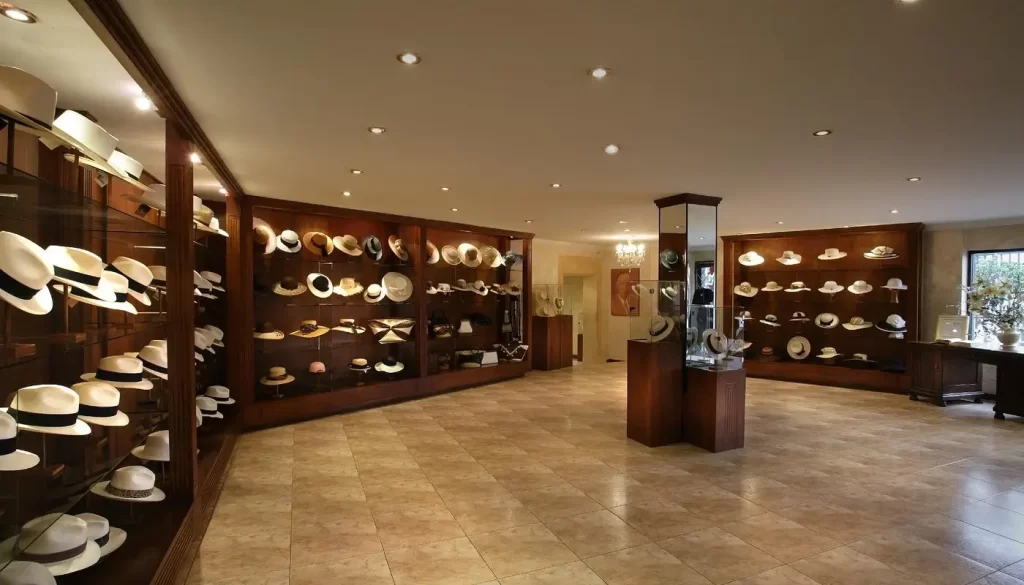
A fascinating stop in Cuenca is the Homero Ortega Panama Hat Museum, where visitors can learn about the history and craftsmanship behind Ecuador’s world-famous Panama hats. Despite the name, these iconic hats originated in Ecuador and have been woven in the region for generations using the fine fibers of the toquilla palm. At the museum and workshop, guests can see how the hats are made—from the delicate hand-weaving process to the final shaping and finishing. Informative displays explain the cultural significance of the craft, which is recognized by UNESCO as an Intangible Cultural Heritage tradition. Visitors can also browse the showroom, where beautifully crafted hats are available in a wide range of styles and qualities.
8. Mirador de Turi
For one of the best panoramic views of the city, visit Mirador de Turi. Located on a hill just south of the historic center, this scenic overlook provides sweeping views across Cuenca’s red-tiled roofs, church domes, and surrounding mountains. The viewpoint sits beside the historic Church of Turi and is especially popular at sunset and in the evening when the city lights begin to glow. Small cafés, local artisans, and food vendors often line the plaza, making it a pleasant place to relax while taking in one of the most memorable views of Cuenca.

9. Visit El Cajas National Park
For visitors who want to experience the natural beauty of the Andes, a trip to Cajas National Park is one of the most memorable excursions from Cuenca. Located about 30 minutes west of the city, this high-altitude national park is known for its dramatic landscapes, rolling hills, and more than 200 glacial lakes. Well-marked trails wind through páramo grasslands and cloud forests, offering opportunities to see native wildlife and Andean bird species.
Getting to El Cajas from Cuenca is relatively easy. Visitors can take a taxi or arrange a private tour, which typically takes about 30–40 minutes along the scenic highway toward Guayaquil. Budget travelers can also take a bus from the Cuenca Terminal Terrestre toward Guayaquil and ask the driver to stop at the park entrance (Tres Cruces). From there, several hiking trails begin near the road, making it possible to explore parts of the park even without a car. The park’s cool mountain air, quiet lakes, and sweeping scenery make it a rewarding half-day or full-day trip from Cuenca.

Where to Stay in Cuenca Ecuador
Cuenca offers several types of accommodations, from large hotels to small guest houses and private apartments. For many visitors, the best area to stay is the historic center (El Centro), where most of the city’s main attractions are within walking distance.
The historic district surrounds Parque Calderón, the central plaza of the city. From here you can easily walk to churches, museums, cafés, markets, and the scenic river walks along the Tomebamba River. Staying in this area allows visitors to experience Cuenca’s colonial architecture, lively plazas, and cultural sites without needing a car.
Travelers who prefer a quieter and more personal experience often choose boutique guest houses instead of large hotels. Smaller properties typically offer more space, local knowledge, and a more relaxed atmosphere. Many guests also appreciate having a kitchen, separate living space, or garden areas during longer stays.
One option in the historic center is Casa Tierra Cuenca, a renovated patrimonial home offering fully furnished apartments for short, mid-term, and extended stays. Located just a few blocks from Parque Calderón and near the Tomebamba River, it provides convenient access to the city’s restaurants, galleries, and historic sites while still offering a quiet residential setting.
Whether visitors choose a hotel, apartment, or guest house, staying in Cuenca’s historic center provides the best access to the culture, architecture, and walkable charm that make the city one of Ecuador’s most popular destinations.
Map
Tip: click the  on the upper left to see the map legend and change what items are shown on the map.
Frequently Asked Questions
How many days should you spend in Cuenca Ecuador?
Most visitors spend at least a week exploring the historic center, museums, markets, and nearby attractions like El Cajas National Park. Many miss Cuenca after a three month stay.
Is Cuenca Ecuador walkable?
Yes. Cuenca is a very walkable city, especially in the historic center where many of the main attractions are located close together. Visitors can easily walk to places such as Parque Calderón, the New Cathedral of Cuenca, the Plaza de las Flores, and several museums and cafés within just a few blocks. For destinations outside the city, such as Cajas National Park, visitors typically take a taxi, bus, or guided tour to reach the park.
What is Cuenca Ecuador known for?
Cuenca is known for its well-preserved colonial architecture, historic UNESCO World Heritage district, traditional Panama hat weaving, and nearby natural attractions such as Cajas National Park. The city’s most recognizable landmark is the New Cathedral of Cuenca, famous for its large blue domes that rise above the historic center.
What is the best area to stay in Cuenca?
The best area to stay in Cuenca is El Centro, the historic center of the city. This UNESCO World Heritage district places visitors within easy walking distance of major attractions such as Parque Calderón, the New Cathedral of Cuenca, museums, markets, and the river walks along the Tomebamba River. Visitors planning to explore these attractions often choose to stay in Cuenca Ecuador’s historic center so they can walk to many of them. Casa Tierra Cuenca offers fully furnished apartments just a few blocks from Parque Calderón and the Tomebamba River, providing a convenient base for exploring the city.